Serialisation (Track & Trace)
Through its METS technology division, MARDEN EDWARDS has developed recognised expertise in serialisation, aggregation and traceability for production lines, initially proven against some of the strictest regulatory requirements in the world: those of the tobacco industry. This expertise — design, integration, coding/labelling, supervision and reporting — is directly transferable to sectors subject to traceability obligations: pharmaceuticals (serialisation of medicines), cosmetics and perfumery, food and beverages, paper.
INVOLTEC draws on this know-how to support its customers in integrating traceability solutions on their existing or new packaging lines. INVOLTEC offers these Track & Trace systems in these four markets.
Technology expertise developed by MARDEN EDWARDS (METS division), presented in English at tracktrace.technology.
Guaranteed system efficiency of 99.95%
The system is designed not to slow the line down: its efficiency is guaranteed according to a protocol and operating levels defined with you for each line, and 100% of the aggregation data sent to the traceability server is accurate.
at sales-unit level
at batch level
transmitted
by METS
A coding and aggregation line in operation
Each unit is coded and read by camera, grouped into a bundle, film-wrapped and then labelled: the bundle code is linked to the units it contains.
Track & Trace data sheet for perfumery and cosmetics (PDF) ↓
Why serialise a packaging line?
Serialisation means assigning a unique identifier to each packaged product, so that it can be traced throughout the supply chain, from the production line to the point of sale or dispensing. It makes it possible to:
- combat counterfeiting, by making each unit individually identifiable rather than just by batch;
- make product recalls safer, by precisely identifying the units concerned rather than entire batches;
- meet regulatory requirements, particularly in pharmaceuticals, where serialisation is a legal obligation in many countries;
- improve tracking of logistics flows, from production to distribution.
Historically the most stringent in the pharmaceutical sector, traceability requirements now apply just as much to cosmetics and food, where combating counterfeiting and making recalls safer are becoming matters of compliance as well as brand image. Each project is studied specifically according to the line, the applicable regulations and the information systems already in place at the customer’s site, regardless of the make of the existing line.
Who is METS
METS (MARDEN EDWARDS Tracking System) is the technology division of MARDEN EDWARDS, a British company based in Wimborne (Dorset, United Kingdom), founded more than 65 years ago and specialising in automation and industrial machinery. Design, development, manufacturing, assembly and customer support are all carried out in-house at the UK headquarters.
Serialisation & aggregation
Assignment and tracking of unique identifiers per unit, grouping into higher packaging levels (aggregation) — applicable to packaged products in the markets covered.
Machines & automation
Integration of traceability directly on existing or new production lines.
Coding & labelling devices
Marking and labelling of units in compliance with the regulatory requirements of the sector concerned.
Visualisation & reporting
Line supervision and real-time monitoring of traceability data.
The traceability pyramid (5 levels)
The METS system is organised into 5 levels, from the production workstation up to the regulatory authorities — a structure transferable to sectors subject to traceability obligations.
Level 1 — Line equipment
Coding, labelling and code-reading devices at each station (unit, bundle, case, pallet) handling product serialisation, marking and aggregation.
Level 2 — Line aggregation
The METS system, installed on the line and connected to the plant network, manages communication, validation, visualisation and automation during batch changeovers, labelling and product aggregation.
Level 3 — Plant & warehouse system
Automatic communication with the plant software to receive batch changeover information, traceability codes and label templates, and to transmit aggregation data (case, pallet).
Level 4 — Group & distribution
Receipt of traceability codes supplied by the external code issuer, storage of aggregation data at company level, tracking of products through the distribution and sales chain.
Level 5 — Authorities & regulators
Overall responsibility for the traceability system, issuing of official codes, retention of all activated codes and product movements, provision of data to the inspection authorities.
Diagram adapted from the “Serialisation and Aggregation” page of tracktrace.technology.
Expertise born of some of the most demanding regulatory constraints, offered by INVOLTEC in four markets:
Pharmaceuticals
Serialisation of medicines, compliance with anti-counterfeiting directives.
Cosmetics & perfumery
Traceability of batches and sales units, brand protection.
Food & beverages
Upstream/downstream traceability, easier product recalls.
Paper
Tracking of batches and logistics units, from packaging to pallet.
Sector-specific regulatory knowledge
In-depth understanding of traceability constraints, tailored to each market.
Consulting
Support from experts to define the right solution for the customer’s sector.
Design & development
In-house development team for bespoke solutions.
Manufacturing & assembly
Full quality control carried out at MARDEN EDWARDS’s UK headquarters.
Solutions & line integration
Integration of traceability on the customer’s production lines.
Project management
End-to-end management of the roll-out.
Installation & commissioning
On-site deployment and line validation.
Training & support
Team training and ongoing support after commissioning.
Our guides on this topic
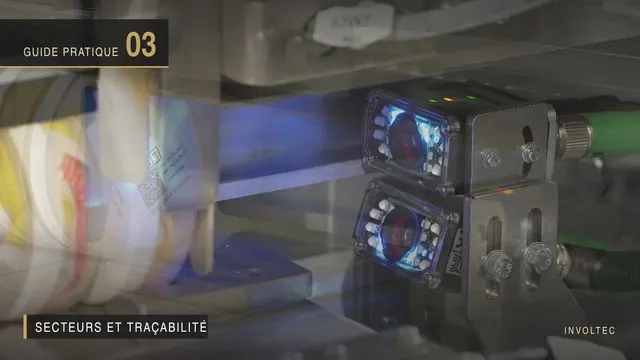 Guide no. 3 · Sectors and traceabilityPharmaceutical packaging: tamper evidence, serialisation and traceabilityTamper evidence, serialisation, aggregation, qualification: what the regulations actually require of a line.
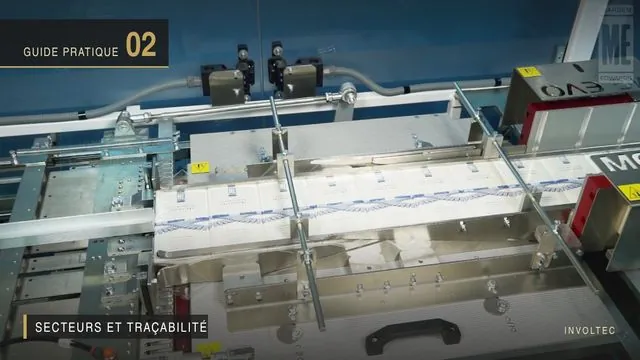 Guide no. 2 · Sectors and traceabilityOverwrapping in cosmetics and perfumery: the constraints that make the differenceGift boxes, limited editions, film finish: the specific requirements of luxury goods and perfumery.
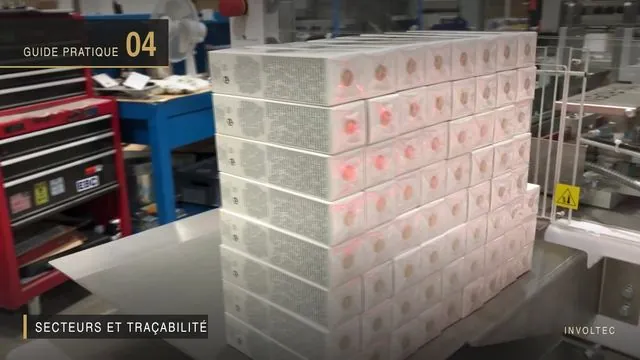 Guide no. 4 · Sectors and traceabilityFood and confectionery: hygiene, high output and seasonalityVery high output and seasonal peaks: how to size a line without over-investing.